The Bus Tour Problem
There is a particular experience familiar to anyone who has attended a major sporting event with a large group package. It involves a coach that departs at a fixed time regardless of whether everyone is on it, a guide with a microphone and a lanyard, a hotel chosen for its proximity to the coach parking, and a strong sense that you are being moved rather than taken somewhere.
The bus tour experience is the dominant model in F1 fan travel because it scales. One “guide” can manage fifty guests from the front of a coach. Fifty guests in a hotel justify a discount rate. The economics work well for the operator. The guest experience, however, is a different calculation.
What Sixteen People Can Do That Fifty Cannot
Access
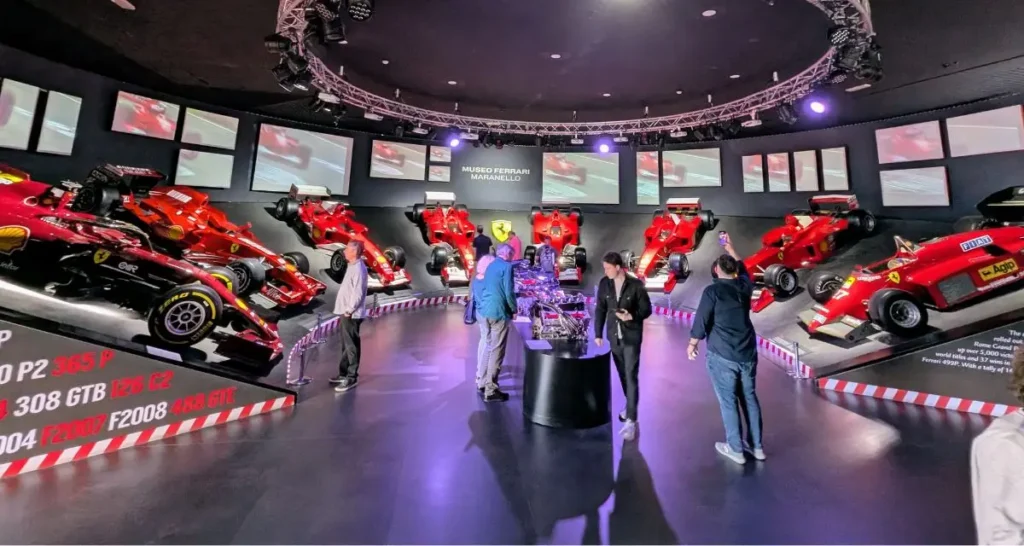
The Lamborghini factory tour accommodates small groups. The family-owned balsamic vinegar producer in the Modena hills does not have a loading bay for coach parties. The restaurant in Milan that makes the best risotto you will eat in your life has twenty-six covers. These experiences exist only because we bring the right number of people.
Movement
Sixteen people can board two passenger vans in three minutes. They arrive where they are going when it suits the day, not when the coach schedule permits. If something extraordinary is happening: the Ferrari team is doing an unexpected public demonstration, or the balsamic producer wants to show one more barrel… and the van stops for the experience. A bus has a schedule.
Conversation
A group of sixteen people eating dinner together is a table. A group of fifty is a dining event with logistics, if it happens at all. The former produces conversations that, by Day 3 of a seven-day tour, have turned strangers into travel companions who are already planning the next trip. The community that forms on a tour is part of the experience. Guests who met at Monza come back to Monaco.
The Economics of a Proper Small Group
Small groups cost more to operate per person than large ones. It means our tours are at times priced at a premium over large-group packages. It also means that every guest on the tour gets an experience that a large-group operator genuinely cannot deliver. Not because they don’t want to, but because their business model prevents it.
Sixteen Is a Number We Chose
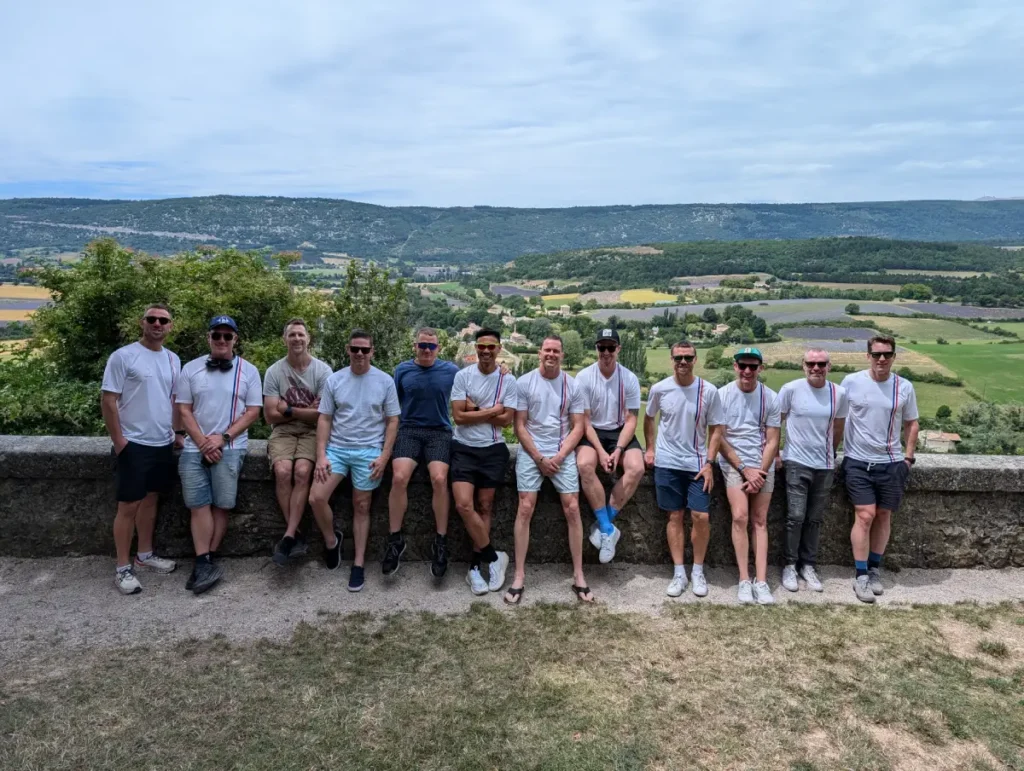
We didn’t arrive at sixteen guests by accident. We tested group sizes over years of operating Tour de France and Giro d’Italia tours and learned where the threshold sits. Sixteen is the number where everyone knows everyone’s name by Day 2. Where the group occupies a single long table at dinner. Where the van is full enough to feel like an event and small enough that nobody is sitting at the back feeling anonymous.
What to Look for When Choosing an F1 Tour
If you’re comparing F1 tour operators, group size is one of the most revealing questions you can ask. A company that moves guests in coaches of forty or fifty will tell you that their guide-to-guest ratio is fine. What they cannot tell you is that you’ll get into the Lamborghini factory. Or sit in a restaurant that only has fourteen tables. Or arrive at the circuit at exactly the moment you want to.
Group size is where the experience lives or dies. We chose sixteen. We chose vans. We’ve been choosing both for thirty years of sporting event travel.